Course information
The French A level is made up of five modules at AS level and a further five at A level.
The first half of the A level will build on the basics you have learned in GCSE French to improve fluency when talking about family and relationships, your lifestyle, the media and popular culture.
In the second half of the course, you will move on to more complex topics such as the environment, cultural subjects and contemporary social issues. Each module will help to develop speaking, listening, reading and writing skills while expanding your vocabulary and knowledge of verbs and sentence structure.
Using a series of activities, self-assessment tests and support from your tutor, you will become a confident speaker of French on a variety of subjects.
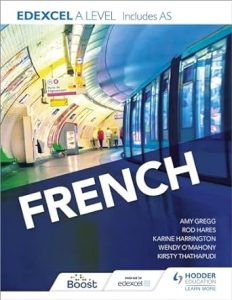
You will have access to an ebook of the supporting textbook for the duration of your course. The ebook is accessible via Hodder Education’s Dynamic Learning Platform and Dynamic Reader App.
Alongside the ebook, you will also have access to online self-assessments, grammar lists and audio practice via the Hodder Dynamic Learning Platform
The course includes thirteen Tutor-marked assignments which will help to measure your progress and put your knowledge to the test. Your tutor will help you prepare for the spoken component of your assessment. However, you will need to find additional sources of conversational practice beyond this.
Learn a new language Apply Now
Online Course? Paper Based? Somewhere in between? It’s your choice!
All of our French A level students receive:
- Traditional printed learning materials
- Access to our online resources with on-the-go access to all your regular lessons
- Unmatched support by a fully qualified teacher online and by phone
Examining board and assessment
The French A level course has been written to prepare you for Edexcel’s French A level, syllabus code 9FR0.
Paper 1:
Listening, reading and translation
Written examination: 2 hours
40% of the qualification
80 marks
Paper 2:
Written response to works and translation
Written examination: 2 hours and 40 minutes
30% of the qualification
120 marks
Paper 3:
Speaking
Total assessment time: between 21 and 23 minutes, which includes a single period
of 5 minutes’ formal preparation time
30% of the qualification
72 marks
What can I do with a French A level?
French is a global language, with an estimated 220 million speakers. After English, it’s the second most widely-learned language: it’s taught in almost every country in the world, making it a true lingua franca.
As such, it’s an important language for business, and not only in France, Belgium and Switzerland. As well as being the preferred language in Quebec and many other parts of Canada, it’s widely spoken across the Caribbean and North and Central Africa, including Algeria, Tunisia, Haiti and Morocco. Whether you’re planning to travel, study abroad or work for any organisation that does business overseas, French is one of the most useful languages to have at your command.
Additionally, French is a great stepping-stone language for learning other Romance languages such as Italian, Spanish and Romanian. If you intend to work in an international role where you’ll need to comprehend and translate between several different languages, a qualification in French will give you a great head-start.
Multilingualism is a highly sought-after skill in a variety of industries and sectors, from academic research and international relations to sales and customer-facing roles, nursing and website development. Even if your job doesn’t specifically require it, being multilingual helps you to live, work and travel all over the world.
If you’re pursuing Higher Education, a French A level is a useful foundation for a variety of degrees – as well as directly connected courses such as French Literature, it can open up new avenues in subjects like politics, history, economics and philosophy. Being able to read texts in their original language is always a plus!
Some examples of job roles where a French A level will help you include:
- Customer service
- Tech support
- Sales and marketing
- Publishing
- Translation services
- Copywriting
- Journalism
- Civil service
- Nursing and healthcare
I am a full-time student at the English National Ballet School, therefore I'm aspiring to become a dancer. However, I also wanted to continue with my academic studies. I felt very happy studying with Oxford Home Schooling and had an amazing experience filled with support and well-structured lessons. My student adviser did an amazing job in helping me enjoy my home studies.
Isabelle Brouwers, Grade A
Learn a new language Apply Now
How much does it cost?
Our French A level course fee is £525 with a £105 deposit, payable in eight instalments of £52.50.
You will receive support from a fully-qualified tutor holding either a Postgraduate Certificate in Education (PGCE) or a degree in education. This support includes:
- Marking all assignments for the course
- Written answers to specific study problems
- Tutor contact via phone, email or skype
- An ebook of the course text
When you begin this course, you will agree an examination date or dates with your Student Adviser. Your support period lasts up to this examination date.
Prerequisites
Normally you are required to have at least four good GCSEs to begin the French A level, ideally including a B or above in GCSE/IGCSE French or equivalent.
If you have other relevant qualifications or experience which you feel would allow you to start an A level French course, please contact one of our student advisers on 0800 975 75 75.


Books
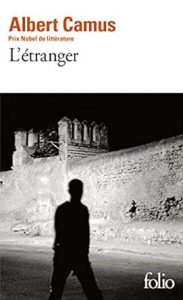
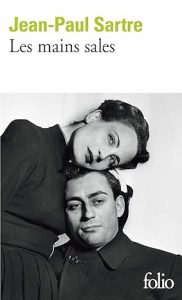
Our French A level course is supported by the texts below. You will need to obtain copies of the literary texts. For the duration of your course, you will be provided with an online copy of the main supporting text which can be accessed via a web browser or an app. You will also be able to access the answers to activities within the textbook via Hodders online dynamic learning platform.