KS3 Science Courses
Flexible online Science courses for Years 7, 8 and 9
Build confidence in Biology, Chemistry and Physics with structured home study courses for Key Stage 3 students. Our KS3 Science courses are designed for students in Years 7, 8 and 9, helping them develop scientific knowledge, practical thinking and investigation skills before moving on to GCSE.
Whether your child is learning at home full time, needs extra support alongside school, or wants a more flexible way to study, our KS3 Science courses provide clear materials, regular structure and optional tutor support.
From £14.99 / month
- KS3 Science for Years 7, 8 and 9
- Start studying online
- Minimum 6-month subscription
- Optional printed course materials
- Tutor marking available as an add-on
Flexible online Science courses for Years 7, 8 and 9
Build confidence in Biology, Chemistry and Physics with structured home study courses for Key Stage 3 students. Our KS3 Science courses are designed for students in Years 7, 8 and 9, helping them develop scientific knowledge, practical thinking and investigation skills before moving on to GCSE.
Whether your child is learning at home full time, needs extra support alongside school, or wants a more flexible way to study, our KS3 Science courses provide clear materials, regular structure and optional tutor support.
From £14.99 / month
- Start studying online
- Minimum 6-month subscription
- Optional printed course packs
- Tutor marking available as an add-on
KS3 Science home study for Years 7, 8 and 9
Science is an important part of Key Stage 3 learning. It helps students understand the living world, materials, energy, forces, space and the scientific methods used to investigate questions and explain evidence.
Our KS3 Science courses are written for independent study and cover the main areas of Biology, Chemistry and Physics. Students also develop scientific investigation skills, learning how to plan practical work, interpret results and think carefully about evidence.
The courses are suitable for home educated students, students who are temporarily out of school, and students who want additional support outside the classroom. The aim is to help students build a strong foundation before they move on to GCSE or IGCSE Science.
Choose the right KS3 Science year
Key Stage 3 covers Years 7, 8 and 9, but students do not always fit neatly into a single year group. Some students may need to consolidate earlier scientific ideas, while others may be ready to move on to more advanced topics.
You can choose the course that best matches your child’s current confidence and experience rather than simply their age.
Year 7 Science
A good starting point for students beginning Key Stage 3 Science. Year 7 introduces Biology, Chemistry, Physics and scientific investigation through topics such as characteristics of life, elements and compounds, density, cells, energy, mixtures, forces, reproduction, acids and alkalis, light, disease, particles and the Solar System.
Year 8 Science
Year 8 Science develops the foundations from Year 7 and introduces more detailed work in Biology, Chemistry and Physics. Students study food and digestion, respiration, breathing, rocks, heat, electrical circuits, ecosystems, gravity and scientific investigation.
Year 9 Science
Year 9 Science is the final stage of the Key Stage 3 course and helps students prepare for GCSE or IGCSE Science. Students explore variation, selection, photosynthesis, plant reproduction, skeletons and health, chemical reactivity, gases, air pollution, pressure, speed, turning forces, magnets, sound and space.
When choosing a KS3 Science course, think about:
- your child’s confidence with Biology, Chemistry and Physics
- whether they need to strengthen earlier scientific knowledge before moving on
- how comfortable they are with practical thinking and scientific investigation
- whether they are ready for more detailed explanations and written answers
- how soon they are likely to move on to GCSE or IGCSE Science
How our KS3 Science home study courses work
1.Choose the right year level
Select the Science course that best matches your child’s confidence, previous study and readiness, rather than relying only on their school year.
2. Start studying online
Once enrolled, students get access to structured online course materials, with lessons, activities, self-assessment questions and assignments.
3. Add support when needed
Many students choose to add printed course packs, tutor-marked assignments or extra academic support as they work through the course.
4. Build towards GCSE
KS3 Science helps students develop the scientific knowledge, practical awareness and investigation skills that can support later GCSE or IGCSE study.
What students will study in KS3 Science
Across KS3 Science, students work through the main areas of the Key Stage 3 curriculum, including:
- Biology, including cells, organisms, reproduction, ecosystems, plants and health
- Chemistry, including elements, compounds, particles, mixtures, acids, gases and reactivity
- Physics, including energy, forces, light, electricity, heat, pressure, sound and space
- scientific investigation and practical skills
- planning experiments and thinking about fair tests
- interpreting results and drawing conclusions
- using scientific vocabulary clearly and accurately
- developing safe and thoughtful approaches to practical work
- preparing for the demands of GCSE or IGCSE Science
The aim is not just to remember facts, but to help students understand how Science works and how scientific ideas can be tested, explained and applied.
KS3 Science Year 7
Year 7 Science introduces students to the foundations of Key Stage 3 Science. Students begin by looking at the variety and characteristics of life, elements and compounds, density, floating and sinking, and the design of scientific investigations.
They then move on to cells, organisms, energy, mixtures, life cycles, forces, reproduction, acids and alkalis, light, microbes, particles and the Solar System. The course helps students build confidence across Biology, Chemistry and Physics while beginning to develop practical investigation skills.
KS3 Science Year 8
Year 8 Science develops the skills and knowledge introduced in Year 7, with more detailed work across Biology, Chemistry, Physics and scientific investigation.
Students study food and digestion, respiration, breathing, adaptations, ecosystems, symbols, formulae and equations, burning, rocks, heat, electrical circuits, gravity, weight and orbits. The year also includes a student investigation, helping students practise planning, carrying out and interpreting scientific work.
KS3 Science Year 9
Year 9 Science is the final stage of the Key Stage 3 course and helps students prepare for GCSE or IGCSE Science.
Students study variation, artificial selection, photosynthesis, plants as food, plant reproduction, skeletons and health, the reactivity series, chemical patterns, gases, air pollution, pressure, turning forces, speed, magnets, electromagnetism, sound, satellites, stars and galaxies.
The course brings together key ideas from Biology, Chemistry and Physics, helping students develop the confidence and scientific understanding they need for the next stage of study.
How the course is structured
Each KS3 Science year is divided into six modules. The course covers Biology, Chemistry and Physics, with scientific investigation and practical skills built into the programme.
Lessons include clear aims, context, reading, activities and opportunities to check understanding. Students are encouraged to work carefully through each lesson, complete the activities and use self-assessment tasks to review what they have learned.
Assignments are linked to the course so students can check their progress. Tutor marking and feedback is available as an optional add-on, allowing families to choose whether they would like submitted work to be marked by a tutor.
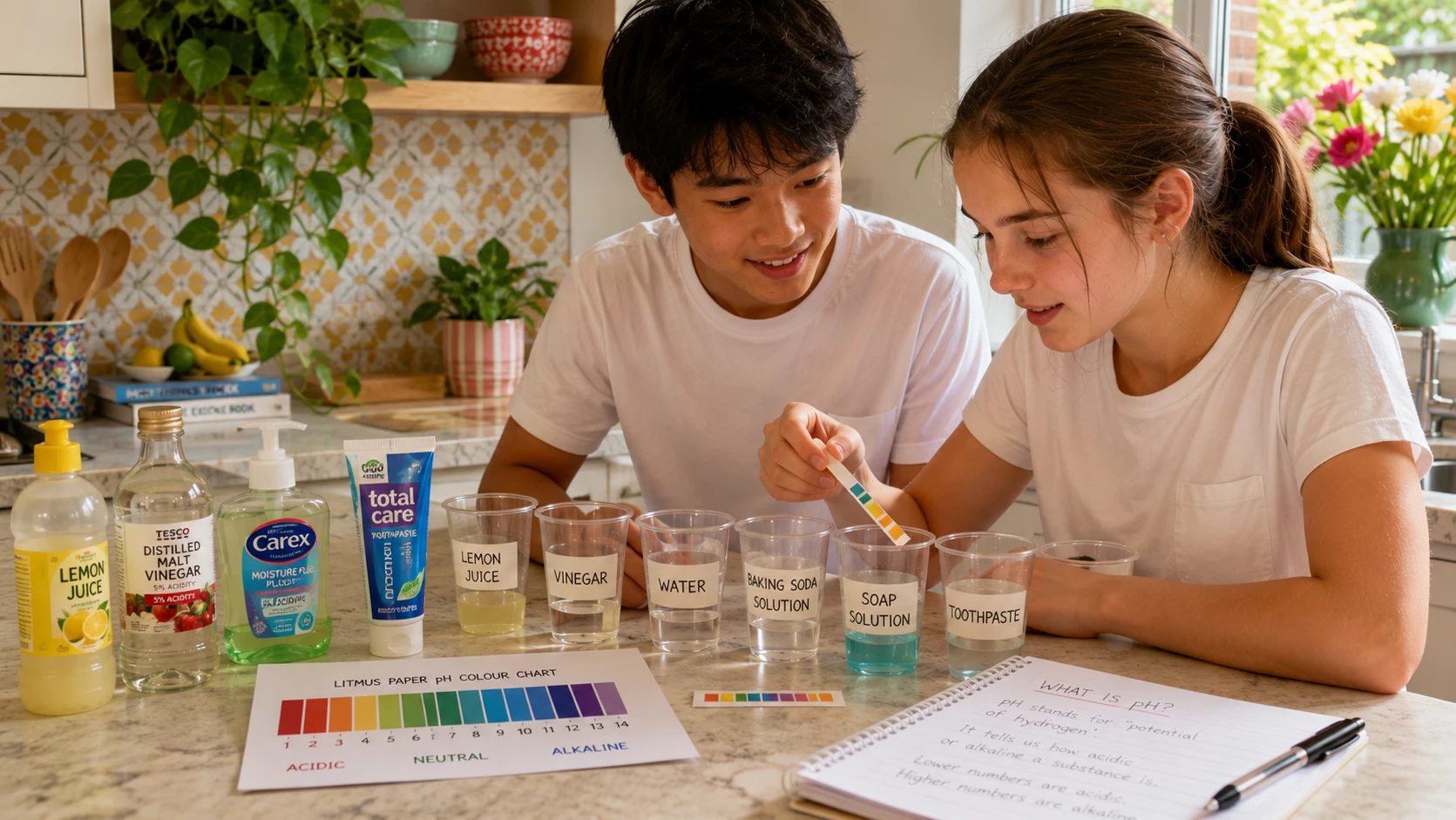
Practical work is an important part of Science. Many activities are designed to be carried out safely at home using common household equipment, but students should always discuss practical work and risk assessments with a parent or guardian before starting.
Choose your KS3 Science course
Each KS3 Science course is designed for flexible home study and can be studied online at a pace that suits your child.
KS3 Science Year 7
Year 7 introduces the characteristics of life, elements and compounds, density, cells, energy, mixtures, forces, reproduction, acids and alkalis, light, microbes, particles and the Solar System.
- Strong starting point for KS3 Science
- Introduces Biology, Chemistry and Physics
- Builds practical investigation skills from the start
KS3 Science Year 8
Year 8 covers food and digestion, respiration, breathing, adaptations, ecosystems, symbols, formulae and equations, burning, rocks, heat, electrical circuits, gravity, weight and orbits.
- Develops confidence across all three sciences
- Covers life processes, rocks, heat, electricity and gravity
- Includes a student investigation module
KS3 Science Year 9
Year 9 explores variation, selection, photosynthesis, plant reproduction, skeletons and health, chemical reactivity, gases, air pollution, pressure, speed, turning forces, magnets, electromagnetism, sound and space.
- Builds towards GCSE-style Science study
- Develops stronger Biology, Chemistry and Physics knowledge
- Prepares students for more advanced scientific thinking
Preparing for GCSE Science
A strong Key Stage 3 foundation makes GCSE or IGCSE Science much easier to approach. Students who understand key ideas in Biology, Chemistry and Physics are better prepared for the more demanding scientific study they will meet later.
Our KS3 Science courses help students build this foundation gradually. They study living organisms, materials, reactions, energy, forces, electricity, space and scientific investigation, while learning how to use evidence and explain scientific ideas clearly.
Year 9 Science is particularly useful for students who are approaching GCSE study. It brings together more advanced topics from Biology, Chemistry and Physics, including variation, photosynthesis, reactivity, gases, pressure, speed, electromagnetism, sound and space.
When your child is ready, they can move on to one of our GCSE Science options.
KS3 Science home study FAQs
Why should I choose Oxford Home Schooling?
- Long-established educational company with experience supporting home-educated students
- Rated “Excellent” on Trustpilot by students and families
- Online and printed resources available on many courses
- Flexible study with tutor support and interest-free monthly payments
Can my child study KS3 Science from home?
Yes. Our KS3 Science courses are designed for flexible home study. Students work through structured lessons from home, covering Biology, Chemistry, Physics and scientific investigation skills.
Which KS3 Science year should my child start with?
Most students start with the course that broadly matches their school year: Year 7, Year 8 or Year 9. However, it is often better to choose based on confidence, previous study and current ability rather than age alone.
A student who needs to strengthen the foundations of Science may benefit from starting earlier, while a confident student may be ready for a more advanced year.
Does my child have to start with Year 7?
No. The year labels are a guide. If your child already has a good foundation in Key Stage 3 Science, they may be ready for Year 8 or Year 9. If they need to rebuild confidence with Biology, Chemistry, Physics or scientific investigation, Year 7 may be the better starting point.
Can my child study different year levels in different subjects?
Yes. Many home-educated students work at different levels in different subjects. Your child might be ready for Year 8 Science while studying Year 7 Maths, or vice versa. The best choice is the level that matches their current confidence and skills.
Does KS3 Science prepare students for GCSE?
Yes. KS3 Science helps students build the knowledge and scientific thinking needed before moving on to GCSE or IGCSE Science. Students develop understanding across Biology, Chemistry and Physics, as well as practical and investigation skills.
Year 9 Science is particularly useful for students preparing for GCSE-level study, as it brings together more advanced topics such as variation, photosynthesis, chemical reactivity, gases, pressure, speed, electromagnetism, sound and space.
Is tutor support available?
Yes. Tutor-marked assignments and additional academic support are available on many KS3 courses.
Tutor-marked assignments are useful because they give students clear feedback on how well they are understanding the course. They also help parents see whether their child is making good progress, where they may need more practice, and whether they are ready to move on to the next stage.
Tutorials can also be helpful, especially when a student has lost confidence, is finding a topic difficult, or would benefit from talking something through with a subject specialist. A tutorial gives the student a chance to ask questions, receive guidance and feel less isolated while studying from home.
Do we need a laboratory or specialist equipment?
No. Home students are not expected to have access to a fully equipped laboratory. Many practical activities are designed to use equipment that families are likely to have at home, although some activities may require additional simple items.
At the start of each module, it is sensible for a parent or guardian to look through the practical activities so they can see what equipment may be needed.
Are there safety considerations for home Science practicals?
Yes. Safety is important whenever practical work is involved. Students should think about possible risks before starting an activity and discuss these with a parent or guardian.
Practical work should be supervised by an adult where necessary, and younger children should not be involved in Science practical activities.
Are printed materials available?
Yes. Printed course materials are available on KS3 courses for students who prefer working from paper as well as online.
Paper-based materials can be helpful for students who find it tiring to read everything on screen, who concentrate better with a physical workbook, or who like to highlight, annotate and make notes by hand. They can also make home study feel more structured, especially for younger students who benefit from having a clear folder of work to follow.
Many families use the online course and printed materials together, so the student has the flexibility of digital access while still being able to work from paper when that suits them better.
What is the minimum subscription period?
Our course subscriptions have a minimum subscription period of six months. After that, subscriptions can usually be cancelled in line with the subscription terms.
Is practical work included?
Yes. Practical work is an important part of Science, and the course includes practical activities that can often be carried out safely at home using common household equipment.
Students should always discuss practical work with a parent or guardian before starting, and should carry out a risk assessment where needed. Some activities may require adult supervision.
Are online video resources included?
The Science courses include links to supporting Twig/ClickView resources. These films can help students explore scientific topics in more depth and add variety to the learning experience.
These resources are optional extras. The course materials are designed to be complete without them, so students can still study successfully even if they do not use every video resource.