Institutional review
The order is recorded for institutional review and invoicing.

Pearson Edexcel International GCSE · Specification 4PH1
Explore forces, electricity, waves, energy, matter,
electromagnetism, radioactivity and astrophysics through a
structured home-study course. Develop scientific knowledge,
mathematical confidence and the investigative skills required
for both written examinations.
£14.99 / month
For schools, colleges and local authorities
Choose the course access and support required for each learner. All options selected below apply to the number of identical learner places in this package.
Enter the number of learners who need the same course and package of support.
Add printed materials, assignment marking, practice exam marking or Annual Email Tutor Support as required.
Learner details are not required at checkout. Allocate each purchased place later through your institutional account.
Annual course access is included for every learner place. Add only the extra services needed by the learners in this package.
Please note: Assignment marking and Email Tutor Support are separate services. Email support covers brief questions and guidance; it does not replace assignment marking or individual tuition.
Package selection
The selections below apply to every learner place entered in this package.
Course overview
Study the principles that explain motion, electricity, waves, energy, matter, magnetism, radioactivity and the universe. The course combines physical theory with calculations, data handling and the investigation of practical methods.
Qualification
International GCSE Physics specification 4PH1.
Course structure
An introductory numerical-skills lesson is followed by seven subject modules and final examination practice.
Recommended study time
Work through the course at a pace that suits your timetable and intended examination date.
Enrolment
There is no fixed term date, so you can begin when it suits your study plans.
Assignments
Examination-style assignments are spread throughout the course, followed by practice papers for both examinations.
Assessment
Paper 1 lasts two hours and Paper 2 lasts 75 minutes. Together they assess the complete qualification.
Practical skills
Three lessons focus directly on designing, carrying out and interpreting scientific investigations.
Entry and grading
All candidates sit the same papers, with questions becoming progressively more demanding.
The course is designed to be understandable for students with little or no previous background in science. Students who have already studied some Physics will recognise ideas that are developed in greater depth.
There is no separate practical examination, but both written papers include questions about experimental methods. Students should study the investigative lessons carefully and carry out suitable practical activities where it is safe and practical to do so.
how the course works
Begin with the numerical skills used in Physics and then work through the seven modules in order. Each lesson combines course notes, textbook reading, activities, key terminology and
opportunities to test your understanding.
Receive immediate access to your online Physics course and begin studying without waiting for a fixed term date.
Follow the modules in sequence, using the course notes, required Pearson textbook, activities and selected online resources.
Practise using equations, interpreting graphs and data, evaluating methods and explaining physical phenomena.
Revise all seven modules, practise unfamiliar applications and complete both practice papers under timed conditions.
Optional extra support
Assignment marking, practice-paper marking, Email Tutor Support and one-to-one tutorials can be added when you need feedback, explanation or help with calculations and examination technique.
What you’ll study
The course progresses from motion and forces through electricity, waves, energy, matter and electromagnetism before concluding with radioactivity, particle physics and astrophysics.
The course has been written so that mathematical, theoretical and investigative skills develop progressively. Complete the introductory numerical lesson first and then work through the seven modules in sequence.
Some specification material is assessed only in Paper 2. The course identifies this within the aims at the beginning of the relevant lessons.
Exams and assessment
Pearson Edexcel International GCSE Physics is assessed through two written examination papers. Both papers include calculations, data handling, explanations and questions about practical investigations.
Physics Paper 1
Paper 1 assesses the core specification content and all assessment objectives. It does not assess the additional material identified in the specification as Paper 2-only content.
Physics Paper 2
Paper 2 can assess content from across the complete specification, including the additional topics identified as Paper 2 material.
Entry tier
All candidates sit the same papers. Questions increase in difficulty so that the papers remain accessible while also testing the highest grades.
Practical assessment
There is no separate practical examination or coursework. Investigative skills are assessed in both theory papers.
Question formats
Students may need to calculate, draw and interpret graphs, analyse data and explain physical phenomena in familiar and unfamiliar settings.
Calculator and grading
A suitable calculator may be used in both papers. Candidates must provide their own approved examination calculator.
Examination entry
Course enrolment does not automatically enter you for the examinations. Private candidates should locate a centre that accepts Pearson Edexcel International GCSE Physics and confirm its entry arrangements, fees and deadlines.
Formula-sheet arrangements can change between examination series. Students should check the current Pearson guidance for the year in which they intend to sit the papers.
Support and add-ons
Your subscription provides the structured online course. Optional add-ons let you purchase written feedback, direct tutor contact, live explanations and printed materials when they would help.
Written feedback
Purchase marking for individual tutor-marked assignments and receive feedback on calculations, explanations, experimental methods and examination technique.
Assignment marking bundle£89.91
Exam preparation
Complete the Paper 1 and Paper 2 practice examinations under timed conditions and purchase marking to identify strengths, gaps and revision priorities.
Practice examination marking bundle£47.50
Written tutor contact
Ask focused questions about a physical principle, calculation, graph, experiment or course activity through the managed Email Tutor Support service.
Email Tutor Support£10.00 / month
Live support
Book a live tutorial for personalised explanation, calculation practice, practical-method guidance or focused examination preparation.
Tutorial time Purchased separately
Study your way
Add printed Oxford Home Schooling course materials if you prefer working through explanations, diagrams and calculations on paper. The required textbook is separate.
Printed course materials£50.00
Flexible support
Begin with the core course and add marking, tutor contact, tutorials or printed materials as your Physics studies progress.
Course support
Prospective students can compare the available support services. Existing students can purchase Physics marking, tutorials and other course-specific add-ons through their account.
Frequently asked questions
Find answers about previous scientific experience, practical work, examinations, calculations, assignments and the required textbook.
No. The course is designed to be understandable for students with little or no previous background in science. It begins with an introductory lesson on using numbers in Physics before developing the main subject content.
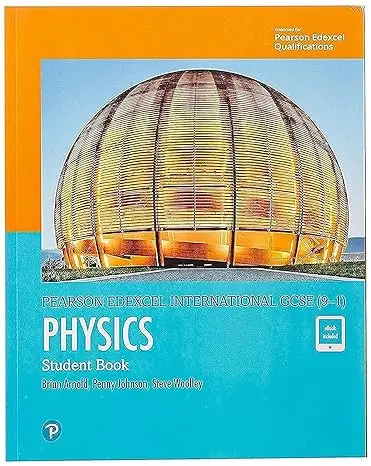
Yes. The course is designed to be used alongside the Pearson Edexcel International GCSE (9–1) Physics Student Book by Brian Arnold, Penny Johnson and Steve Woolley. The textbook is referenced in every lesson and must be obtained separately.
You should carry out suitable practical work where it can be done safely at home or through supervised laboratory access. This helps develop the experimental skills tested in the written papers.
You should not attempt any activity that cannot be carried out safely with the equipment and supervision available.
No. There is no coursework component and no separate practical examination. Experimental design, practical methods and data interpretation are assessed through questions in both written papers.
There are two examinations. Paper 1 lasts two hours, carries 110 marks and contributes 61% of the qualification. Paper 2 lasts 1 hour 15 minutes, carries 70 marks and contributes the remaining 39%.
No. All candidates sit the same two examination papers. Questions progress in difficulty, and the qualification is graded on the 9–1 scale.
Yes. A suitable calculator may be used in both papers. Mobile phones and devices capable of connecting to the internet cannot be used as examination calculators.
Pearson’s formula-sheet arrangements may vary between examination series. Check the current guidance for the year in which you will sit the examinations.
Even where a formula sheet is supplied, you still need to understand which equation to use and how to apply it correctly.
The course contains ten Tutor-marked Assignments placed throughout the seven modules. Marking can be purchased when you want feedback on your understanding, calculations, explanations and practical reasoning.
Questions may require calculations, graph drawing, data interpretation, descriptions of physical phenomena and written explanations. Some information may be unfamiliar, so students must apply physical principles rather than rely only on recalling facts.
In combination with other suitable IGCSE subjects, the course provides useful preparation for Physics at A level. Students should check the entry requirements of their intended sixth-form or course provider.
Ready to begin?
Enrol at any time and begin working towards the Pearson Edexcel International GCSE Physics qualification through a structured, flexible home-study course.
Return to the enrolment panel to review today’s payment and add the course to your basket.