Institutional review
The order is recorded for institutional review and invoicing.

Pearson Edexcel International GCSE · Combined Science 4SD0
Study Biology, Chemistry and Physics through one structured home-study course. This Pearson Edexcel IGCSE Combined Science course develops scientific knowledge, practical understanding and the confidence to tackle all three written examination papers.
£24.99 / month
For schools, colleges and local authorities
Choose the course access and support required for each learner. All options selected below apply to the number of identical learner places in this package.
Enter the number of learners who need the same course and package of support.
Add printed materials, assignment marking, practice exam marking or Annual Email Tutor Support as required.
Learner details are not required at checkout. Allocate each purchased place later through your institutional account.
Annual course access is included for every learner place. Add only the extra services needed by the learners in this package.
Please note: Assignment marking and Email Tutor Support are separate services. Email support covers brief questions and guidance; it does not replace assignment marking or individual tuition.
Package selection
The selections below apply to every learner place entered in this package.
Course overview
This course prepares students for the Pearson Edexcel IGCSE Combined Science specification. It brings together key topics from Biology, Chemistry and Physics, helping students build a broad scientific understanding while also developing investigative skills and examination confidence.
Qualification
Combined Science specification 4SD0.
Subjects covered
Study all three sciences within one structured home-study course.
Course structure
Five Biology modules, six Chemistry modules and seven Physics modules.
Core lesson content
Includes 23 Biology lessons, 23 Chemistry lessons and 27 Physics lessons, plus practice papers.
Assignments
TMAs are used throughout the course to check progress in each science.
Assessment
One Biology paper, one Chemistry paper and one Physics paper, each contributing one third of the total.
Enrolment
There is no fixed term date, so you can begin when it suits your study plans.
Entry and grading
All candidates sit the same examinations and the final qualification is graded on the 9–1 scale.
This course is ideal for students who want to study all three sciences in one coherent programme. It develops a broad understanding of scientific facts, concepts and principles, as well as the ability to evaluate modern scientific developments and ideas.
There is no separate practical examination, but practical understanding is still important. Students learn how to design investigations, carry out procedures, interpret results and evaluate methods, and these skills are assessed through written questions in the final examinations.
The course is designed to be accessible to students who may have only a limited previous background in science. Those who have already studied some science will also find that the lessons develop earlier knowledge in greater depth.
How the course works
The course is divided into separate Biology, Chemistry and Physics sections. Students can work through them in the suggested order and steadily build the scientific knowledge, vocabulary, mathematical confidence and practical understanding needed for success.
Receive immediate access to your online Double Science course and begin studying without waiting for a fixed term date.
Work through structured lessons supported by Oxford Home Schooling notes, activities and the required Pearson textbooks.
Develop confidence in calculations, graphs, experiments, scientific vocabulary and the interpretation of evidence.
Revise each science in turn and complete practice papers in Biology, Chemistry and Physics under timed conditions.
Optional extra support
Assignment marking, practice-paper marking, Email Tutor Support and one-to-one tutorials can all be added when you want extra explanation, feedback or examination support.
What you’ll study
The course is split into three science sections. Biology introduces living systems and ecology, Chemistry explores substances and reactions, and Physics explains forces, electricity, waves, energy and the universe.
The Biology part of the course contains five modules and 23 lessons. It covers cells, physiology, homeostasis, reproduction, inheritance, ecology and food production, and concludes with a practice examination for Paper 1B.
The Chemistry part of the course begins with an introductory lesson on using numbers in Chemistry, then continues through six modules and 22 further lessons. It covers particles, bonding, reactions, practical skills, organic chemistry and quantitative calculations.
The Physics part of the course contains seven modules and 27 lessons. It covers motion, forces, electricity, waves, energy, gases, magnetism, radioactivity and astrophysics, ending with a practice examination for Paper 1P.
The course is divided clearly into Biology, Chemistry and Physics sections. Students can work through them in the suggested sequence, or alternate between sections if that better suits their timetable.
Within each science, however, it is best to complete the modules in order so that scientific knowledge, calculations and practical skills build progressively.
Exams and assessment
Students sit three written examination papers: one in Biology, one in Chemistry and one in Physics. There is no coursework component and no separate practical examination.
Biology Paper
Assesses all relevant Biology content, including knowledge, understanding, practical reasoning and application of ideas.
Chemistry Paper
Assesses all relevant Chemistry content, including scientific knowledge, calculations and interpretation of practical work.
Physics Paper
Assesses all relevant Physics content, including calculations, practical interpretation and the application of physical principles.
Entry tier
Science IGCSE examinations are not divided into different entry tiers.
Practical work
There is no separate practical paper, but practical skills are tested through written questions.
Question types
Students may be required to perform calculations, draw graphs, and describe, explain and interpret scientific phenomena.
Calculator use
Calculators are permitted in all three papers.
Examination entry
Course enrolment does not automatically enter you for the examinations. Private candidates should locate a centre willing to accept Pearson Edexcel IGCSE Combined Science candidates and confirm its entry arrangements, fees and deadlines.
Make sure your centre enters you for all three components: 4SD0/1B, 4SD0/1C and 4SD0/1P.
Support and add-ons
Your subscription provides the structured online course. Optional add-ons allow you to buy written feedback, direct tutor contact, live support and printed materials when needed.
Written feedback
Purchase marking for individual tutor-marked assignments and receive feedback on scientific understanding, calculations, explanations and practical reasoning.
Assignment marking bundle£206.79
Exam preparation
Complete the Biology, Chemistry and Physics practice papers under timed conditions and purchase marking to identify strengths, gaps and priorities for final revision.
Practice examination marking bundle£71.25
Written tutor contact
Ask focused questions about scientific concepts, calculations, experiments, graphs or course activities through the managed Email Tutor Support service.
Email Tutor Support£10.00 / month
Live support
Book a live tutorial for personalised explanation, support with difficult topics or focused examination preparation in Biology, Chemistry or Physics.
Tutorial time Purchased separately
Study your way
Add printed Oxford Home Schooling course materials if you prefer working from paper alongside your online course and textbooks.
Printed course materials£80.00
Flexible support
Begin with the core course and add marking, tutor contact, tutorials or printed materials as your Double Science studies progress.
Course support
Prospective students can compare the available support services. Existing students can purchase Double Science marking, tutorials and other course-specific add-ons through their account.
Frequently asked questions
Find answers about the qualification, the three sciences, practical work, textbooks, examinations and progression.
This course covers Biology, Chemistry and Physics through one structured programme based on the Pearson Edexcel IGCSE Combined Science specification 4SD0.
No strong previous background is required. The course is designed to be accessible to students with limited prior science experience, while still being useful for those who have studied some science before.
There are three written papers: Biology 4SD0/1B, Chemistry 4SD0/1C and Physics 4SD0/1P.
Each paper lasts two hours and carries 110 marks.
No. Science IGCSE examinations are not divided into different entry tiers. All candidates sit the same papers.
No. There is no coursework and no separate practical examination. Practical skills are assessed through written questions in the final papers.
Practical work can be very helpful in developing your understanding, and you should carry out suitable work if it can be done safely.
Only attempt practical activities that are appropriate for the home environment and properly supervised where needed.
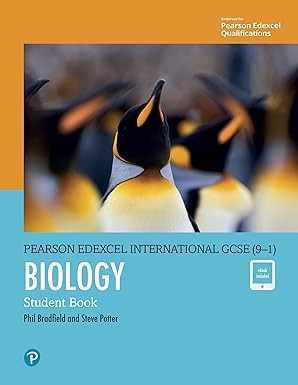
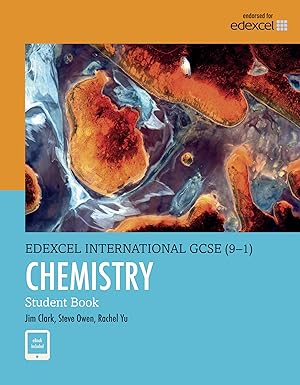
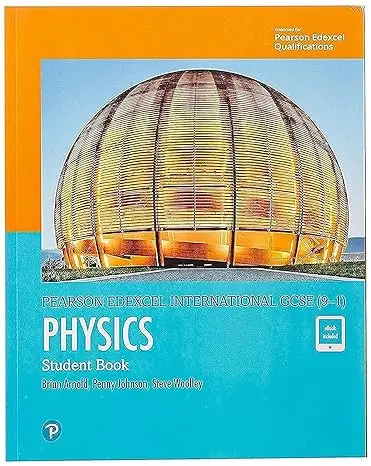
Yes. The course uses three separate Pearson textbooks: one each for Biology, Chemistry and Physics.
Lesson-by-lesson reading references are supplied, and the textbooks provide helpful supporting coverage and extra questions.
Yes. Calculators may be used in all three examination papers.
TMAs appear regularly throughout the course and are designed in an IGCSE style to test the lessons just completed. Marking can be purchased when you want structured feedback.
In combination with other suitable IGCSE subjects, this course provides a strong preparation for further study, including science subjects at A level.
Ready to begin?
Enrol at any time and begin working towards Pearson Edexcel IGCSE Combined Science through a structured, flexible home-study course covering Biology, Chemistry and Physics.
Return to the enrolment panel to review today’s payment and add the course to your basket.