Institutional review
The order is recorded for institutional review and invoicing.

Develop advanced mathematical knowledge, reasoning and problem-solving skills through pure mathematics, mechanics and statistics. This structured home-study course prepares students for the three AQA A-level Mathematics examinations.
£14.99 / month
For schools, colleges and local authorities
Choose the course access and support required for each learner. All options selected below apply to the number of identical learner places in this package.
Enter the number of learners who need the same course and package of support.
Add printed materials, assignment marking, practice exam marking or Annual Email Tutor Support as required.
Learner details are not required at checkout. Allocate each purchased place later through your institutional account.
Annual course access is included for every learner place. Add only the extra services needed by the learners in this package.
Please note: Assignment marking and Email Tutor Support are separate services. Email support covers brief questions and guidance; it does not replace assignment marking or individual tuition.
Package selection
The selections below apply to every learner place entered in this package.
Course overview
A-level Mathematics develops the algebraic, graphical and numerical techniques needed to solve increasingly complex problems. You will study pure mathematics alongside applied work in mechanics and statistics.
The pure mathematics modules cover algebra, functions, coordinate geometry, trigonometry, exponentials, logarithms, sequences, differentiation, integration, numerical methods and differential equations. Mechanics applies mathematics to motion and forces, while statistics develops your understanding of data, probability, distributions and hypothesis testing.
Throughout the course, you will learn to select appropriate methods, present logical working, construct mathematical arguments and interpret answers within practical contexts.
Qualification
AQA specification 7357, combining pure mathematics, mechanics and statistics.
Course structure
Study four pure mathematics modules, two mechanics modules and two statistics modules.
Recommended study time
Students should normally allow two years for lessons, exercises, assignments, consolidation and examination practice.
Enrolment
There are no fixed term dates, allowing you to plan study around your intended examination year.
Assignments
Regular assignments develop mathematical accuracy, problem solving and clear presentation, followed by three full practice papers.
Assessment
Each examination lasts two hours, carries 100 marks and contributes one third of the qualification.
Calculator
Your calculator must meet the current examination requirements for iteration, statistics and probability distributions.
Coursework
The qualification is assessed entirely through the three written examinations.
Students should begin the course with a good understanding of GCSE Mathematics, particularly algebra, equations, fractions, formula manipulation, geometry, trigonometry and Pythagoras’ theorem. A basic pass alone may not provide sufficient preparation for A-level study.
Flexible home study
Work through the modules in sequence, beginning with core algebra, proof, coordinate geometry, differentiation and integration. Later modules extend these ideas into more advanced pure mathematics and applied work in mechanics and statistics.
The course lessons are used alongside the recommended textbooks. Worked examples, exercises and activities give you repeated opportunities to practise techniques and solve increasingly demanding problems.
Mathematics is a progressive subject, so regular practice is essential. You should show every important stage of your working, check mistakes carefully and complete additional questions whenever a topic needs further reinforcement.
Enrol at any time and receive immediate access to your online Maths course. Your included academic induction session helps you understand the structure and plan your studies.
Use the course lessons and textbooks together to understand mathematical ideas, notation, formulae and problem-solving methods.
Complete exercises and activities regularly, recording each stage clearly so that your reasoning can be followed and checked.
Use tutor-marked assignments and full practice papers to improve accuracy, timing, mathematical communication and examination technique.
Flexible additional support
Assignment marking, Email Tutor Support, one-to-one tutorials, mock-exam marking and printed course materials can be purchased separately.
A large proportion of the marks in A-level Mathematics are awarded for correct mathematical working. Writing only the final answer may not gain full credit, even when that answer is correct. Develop the habit of presenting each necessary stage clearly and accurately.
Course content
The course contains 43 lessons across eight modules. Pure mathematics provides the main foundation, supported by applied modules in mechanics and statistics.
The modules should normally be studied in sequence because later pure mathematics, mechanics and statistics work builds directly on techniques introduced during the first year.
Exams and assessment
AQA A-level Mathematics is assessed through three equally weighted written papers. Pure mathematics can be assessed on every paper, with Paper 2 adding mechanics and Paper 3 adding statistics.
Questions range from short, single-mark tasks to extended multi-stage problems. A permitted calculator is required for all three examinations.
Pure mathematics
Assesses proof, algebra, coordinate geometry, sequences, trigonometry, exponentials, logarithms, differentiation, integration and numerical methods.
Pure mathematics and mechanics
May assess any Paper 1 pure content together with vectors, quantities and units, kinematics, forces, Newton’s laws and moments.
Pure mathematics and statistics
May assess any Paper 1 pure content together with sampling, data presentation, probability, statistical distributions and hypothesis testing.
Calculator use
Your calculator must meet current examination regulations and support iteration, summary statistics and probabilities from standard distributions.
Mathematical working
Students should state relevant formulae and show the necessary stages of their calculations clearly.
Coursework
The qualification is assessed entirely through the three written examinations.
Grading
The full A-level is linear, so all three papers must be taken during the same examination series.
Arranging your examinations
Home-educated students enter as private candidates through an approved examination centre. Before booking, confirm that the centre can enter you for all three AQA A-level Mathematics papers.
Support & add-ons
Your subscription provides the structured online course materials and suggested answers required for independent study. Assignment marking, tutorials, mock-exam feedback and printed materials can be purchased separately. Current linked add-on prices are shown below.
Detailed feedback
Submit your solutions for feedback on mathematical accuracy, method, presentation, notation and the clarity of your working.
Assignment marking bundle£134.86
Personal tuition
Book a live session to work through difficult techniques, identify errors and practise solving problems with support from a tutor.
Tutorial time Purchased separately
Exam preparation
Complete full examination-style papers and receive feedback on accuracy, method, timing and the presentation of multi-stage solutions.
Mock examination marking bundle£85.50
Ongoing guidance
Ask brief course-related questions when a mathematical method, notation or lesson activity needs further explanation.
Email Tutor Support£10.00 / month
Printed materials
Add printed, spiral-bound copies of the course materials if you prefer to work through examples and exercises away from the screen.
Printed course materials£50.00
Learn from every attempt
There is often more than one valid way to solve an A-level Maths problem. Tutor marking can identify where an approach is correct, where errors entered the working and how a solution could be made clearer or more efficient.
Explore your options
Prospective students can compare the available support services. Existing students can purchase Maths marking, tutorials and other course-specific add-ons through their account.
Frequently asked questions
Find answers about starting the course, prior knowledge, calculators, examinations, textbooks, assignments and the additional support available.
Yes. There are no fixed term dates, so you can enrol and begin studying when it suits you. You should plan your timetable around the year in which you intend to sit all three examinations.
We recommend allowing approximately 700 hours of study and normally completing the A-level over two years.
The course prepares students for AQA A-level Mathematics specification 7357.
You should have a strong GCSE Mathematics foundation. Algebra, equations, fractions, formula manipulation, geometry, trigonometry and Pythagoras’ theorem are particularly important.
The qualification is assessed through three two-hour written papers. Each carries 100 marks and contributes one third of the final qualification.
No. There is no coursework or non-exam assessment. All assessment takes place through the three written papers.
Yes. A permitted calculator is required for all three papers. It must support iteration, summary statistics and probabilities from standard statistical distributions.
Potentially. Many marks are awarded for the mathematical method and intermediate working, not only the final answer. You should show every necessary stage clearly.
The course covers pure mathematics, mechanics and statistics, including algebra, trigonometry, calculus, numerical methods, motion, forces, probability, distributions and hypothesis testing.
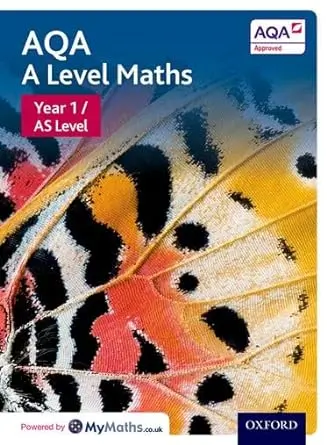
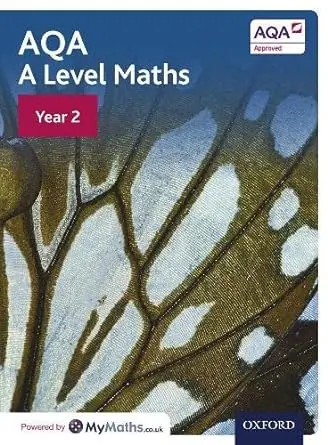
Yes. The course lessons are designed to be studied alongside the recommended AQA Year 1 and Year 2 Mathematics textbooks.
Yes. Students should obtain the AQA Mathematics Large Data Set used for statistical work and examination preparation.
No. Suggested answers support independent study, but personal tutor marking must be purchased separately for individual assignments or as a marking bundle.
Yes. One-to-one tutorials can be purchased separately for help with particular techniques, errors in working or difficult examination questions.
Yes. Mathematics is progressive, and later topics rely heavily on techniques developed during the earlier pure mathematics, mechanics and statistics modules.
Ready to begin?
Enrol at any time and begin working towards the AQA A-level Mathematics qualification through a structured, flexible home-study course.
Return to the enrolment panel to review today’s payment and add the course to your basket.